A winegrowing village at the foot of Sancerre, Saint-Satur stretches between hillsides and river, in a landscape where the vines and the Loire hold a harmonious dialogue.
On the edge of the village, facing a protected nature reserve, we offer you this small country house, patiently restored with scrupulous respect for its materials and its history.
It is one of the two self-contained wings of the Maison Jeanne d’Arc, a 17th-century residence that once belonged to a master shipowner, at a time when Saint-Thibault – a district of Saint-Satur – lived entirely from river trade and fishing.
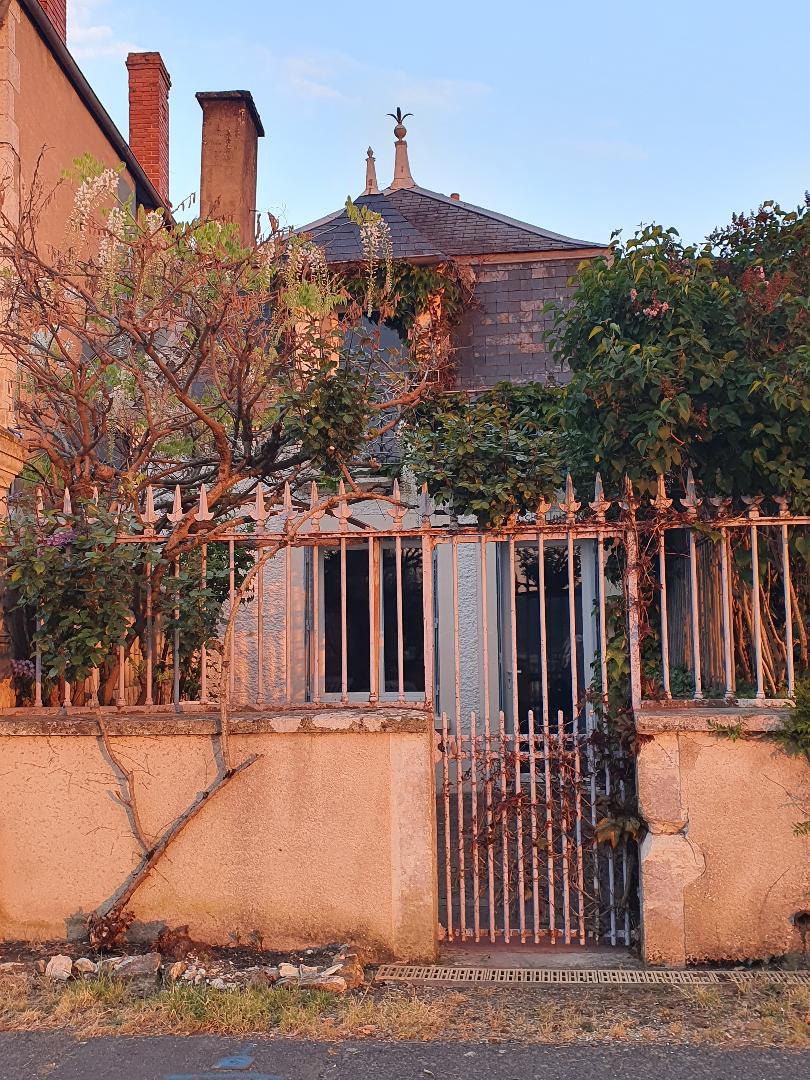
The main house, where the master of the household lived, still has a staircase with turned wooden balusters, typical of Louis XIII interiors, and French-style beamed ceilings.
Its two wings, set at right angles, each had their own purpose.
The first, vast and high, was devoted to trade: it housed a warehouse where goods – wine, timber, foodstuffs – were stored before being shipped by water. Remodelled in the 19th century, its far end later became an elegant summer residence.
The other wing, the one you will stay in, was probably given over to the servants. Its beams and its two-sided roof frame, marked by a break line, are original.
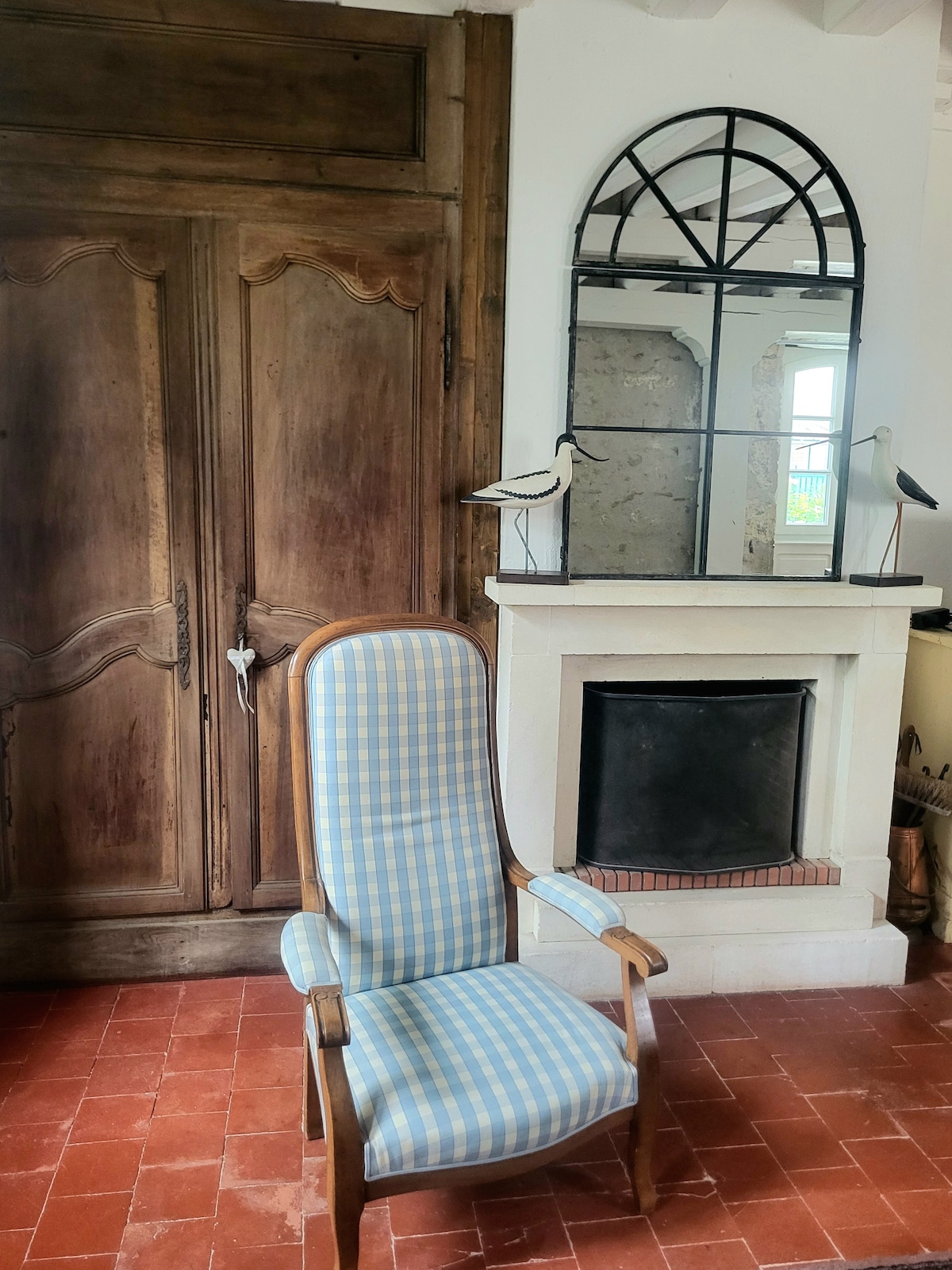
The house long endured the whims of the river: the ground floor was sometimes completely flooded, but the thick walls never gave way.
The Loire, capricious and majestic, nonetheless lays down its own law: its swift current, tight meanders, floods and low waters made navigation perilous. The boatmen of Saint-Thibault won fame for their daring and skill, so much so that they were often called upon to serve in the Royal Navy.
To escape the river’s moods, the Loire lateral canal was dug in the 19th century. It sealed the irreversible decline of river shipping, but not of its memory: boatmen’s traditions still beat strongly in the hearts of the villagers, and every year, during the feast of Saint Roch, patron saint of boatmen, its illustrious past is celebrated with jousting on the Loire and processions to the chapel dedicated to him.
A house of many lives
After its seafaring past, the Maison Jeanne d’Arc went through many transformations. It is whispered that it was, for a time, a house of all pleasures: the profusion of bidets scattered through the bedrooms and the lascivious statue welcoming visitors at the entrance are said to be its silent witnesses.
Wishing to cleanse the house of this stain, one of its owners – the village priest – named it after Joan of Arc, as a pledge of purity regained. To ward off the devil and his temptations, he hung in full view a stone medallion bearing the likeness of the Maid of Orléans, as a conspicuous reminder of the virtues of chastity.
But perhaps the house’s past inflamed him more than he sanctified it. Or was it the ardour of the Loire, that unruly neighbour with its ever-shifting bed, that troubled the quiet resolutions of his soul? Be that as it may, he was caught with his servant in circumstances that left little doubt as to his immodest intentions. He was defrocked, but kept the house, where he had a discreet altar dug so that he could go on officiating for those of his faithful who remained devoted to him.
On his death, his heir, unable to pay the inheritance duties, had to resign himself to selling the two eastern sections of each wing. The year was 1930, and the Maison Jeanne d’Arc thus lost both its ends.
We bought back one of them to partly restore the integrity of the residence, and we now offer it for rent.
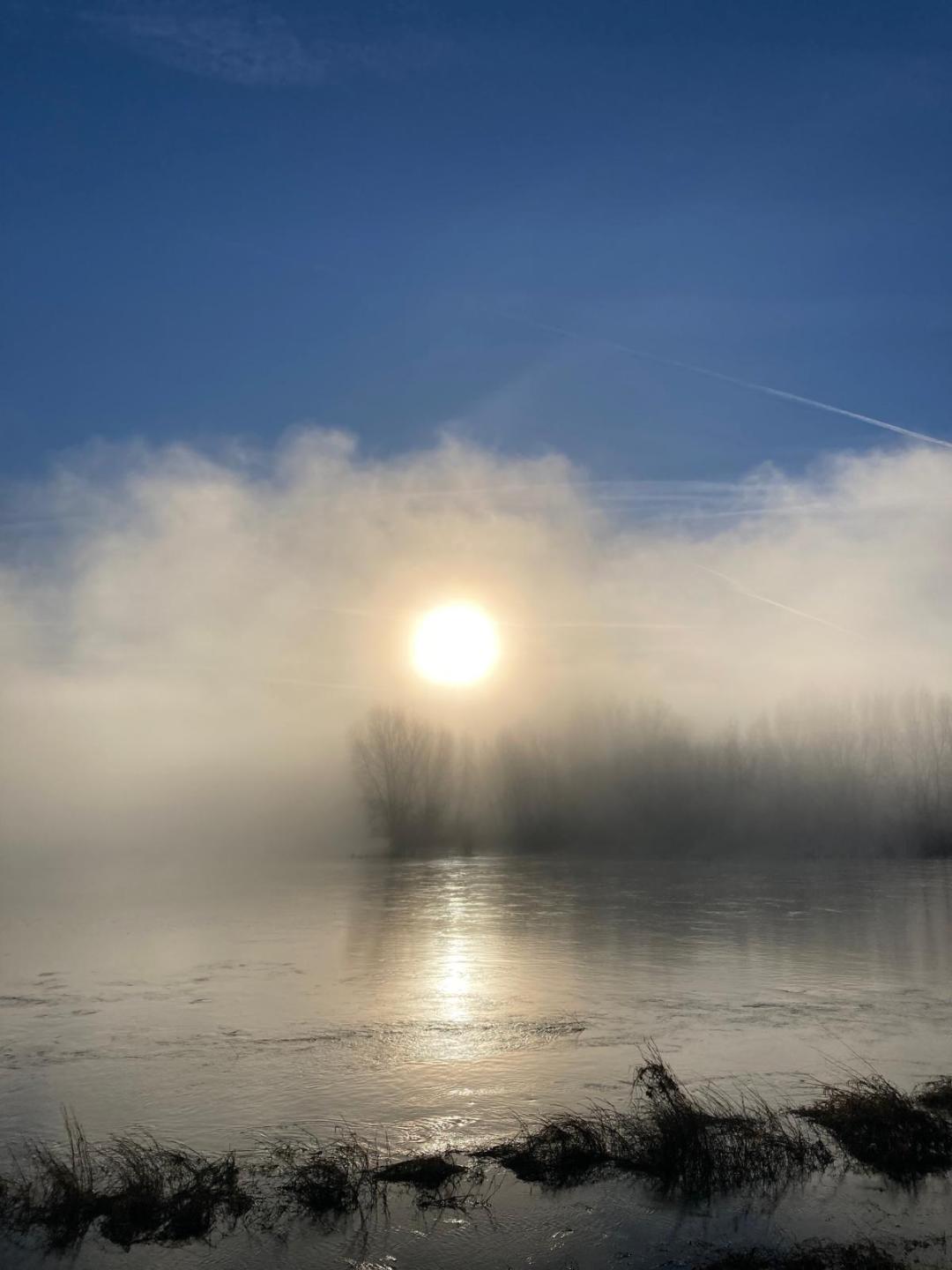
From its windows, the Loire, faithful mistress of the place, unfolds its shifting reflections and iridescent light, like a testimony to the rich and eventful history of the dwellings along its banks and of the people who lived in them.